RTK Safety for Aircraft Ground Operations
Airport aprons are busy environments where baggage handlers, ground crews, service vehicles, and aircraft operate in close proximity. Workers must be able to reach approved access points while staying away from restricted and dangerous areas around the aircraft.
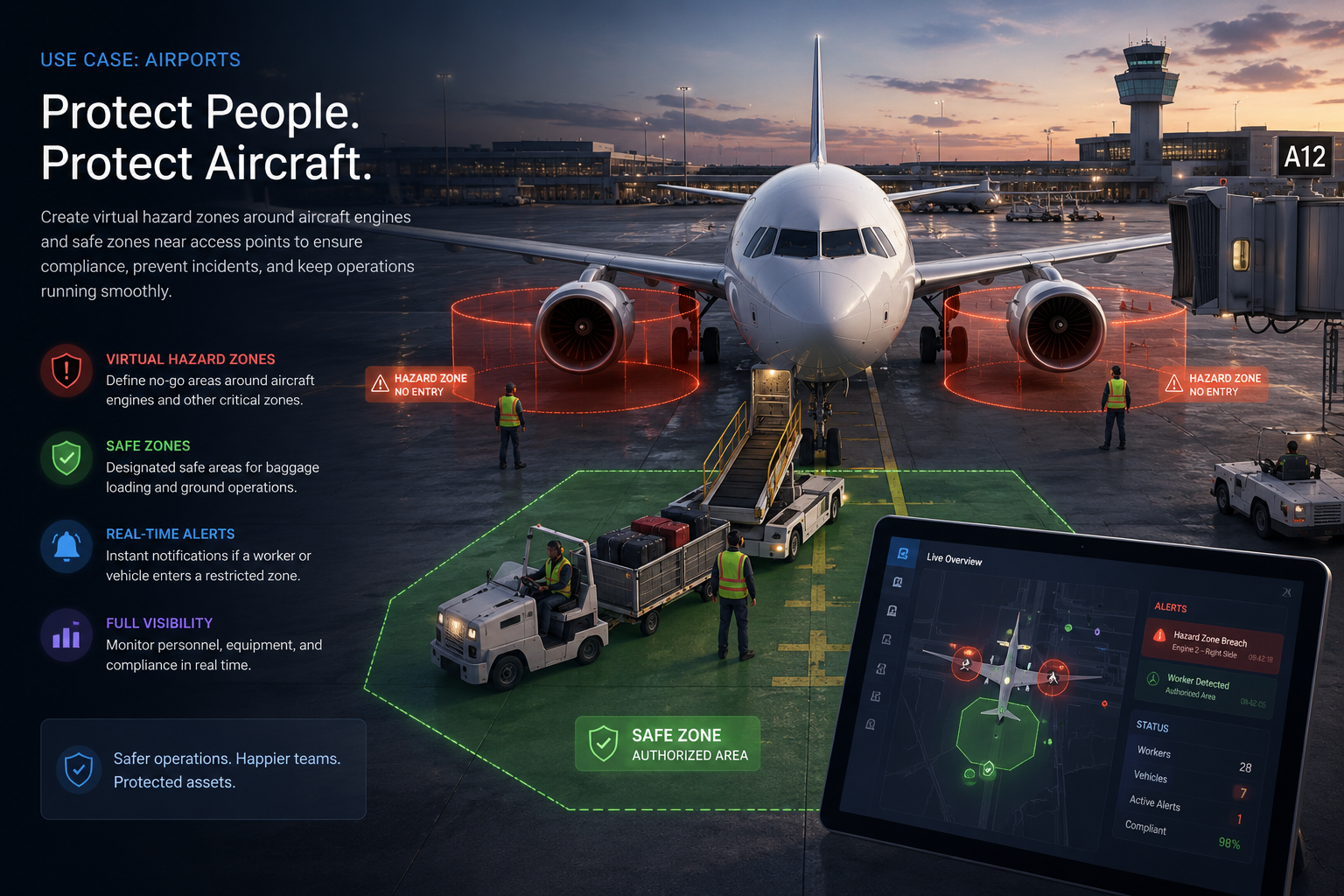
GeoGotar can equip workers and vehicles with RTK tracking devices and create precise virtual zones around a parked aircraft. The system can distinguish authorized baggage-loading areas from restricted engine zones and generate immediate alerts when a tracked worker or vehicle crosses a boundary.
Virtual Hazard Zones Around Aircraft Engines
When an aircraft is parked, GeoGotar can define no-entry geofences around each engine and other critical areas. These zones move with the configured aircraft position and can be activated only while ground servicing is in progress.
If a worker wearing a GeoGotar RTK tracker approaches or enters a restricted zone, the platform can immediately create an alert. Alerts can be shown in the operations portal and can also be delivered to supervisors or connected safety systems.
Safe Zones for Baggage Loading
Approved work zones can be created near cargo doors, baggage belt loaders, service entrances, and designated equipment lanes. These green safe zones show where workers and vehicles are allowed to operate while loading or unloading baggage.
Because the zones are based on precise positioning, GeoGotar can support operational rules that are more specific than broad GPS boundaries. This helps teams separate a valid loading position from a nearby restricted engine area.
How the Airport Use Case Works
- Each worker carries or wears a compact GeoGotar RTK tracker.
- Ground vehicles and baggage equipment can also be fitted with trackers.
- Airport staff define hazard zones around engines and other restricted aircraft areas.
- Safe zones are created around baggage doors and approved service locations.
- The platform monitors worker and vehicle positions in real time.
- A zone breach triggers an immediate alert and creates an auditable event.
Real-Time Alerts and Supervisor Visibility
Supervisors can see the current position of tracked personnel and equipment on a live airport map. The portal can display active hazard zones, safe zones, worker status, recent movements, and current safety alerts from one interface.
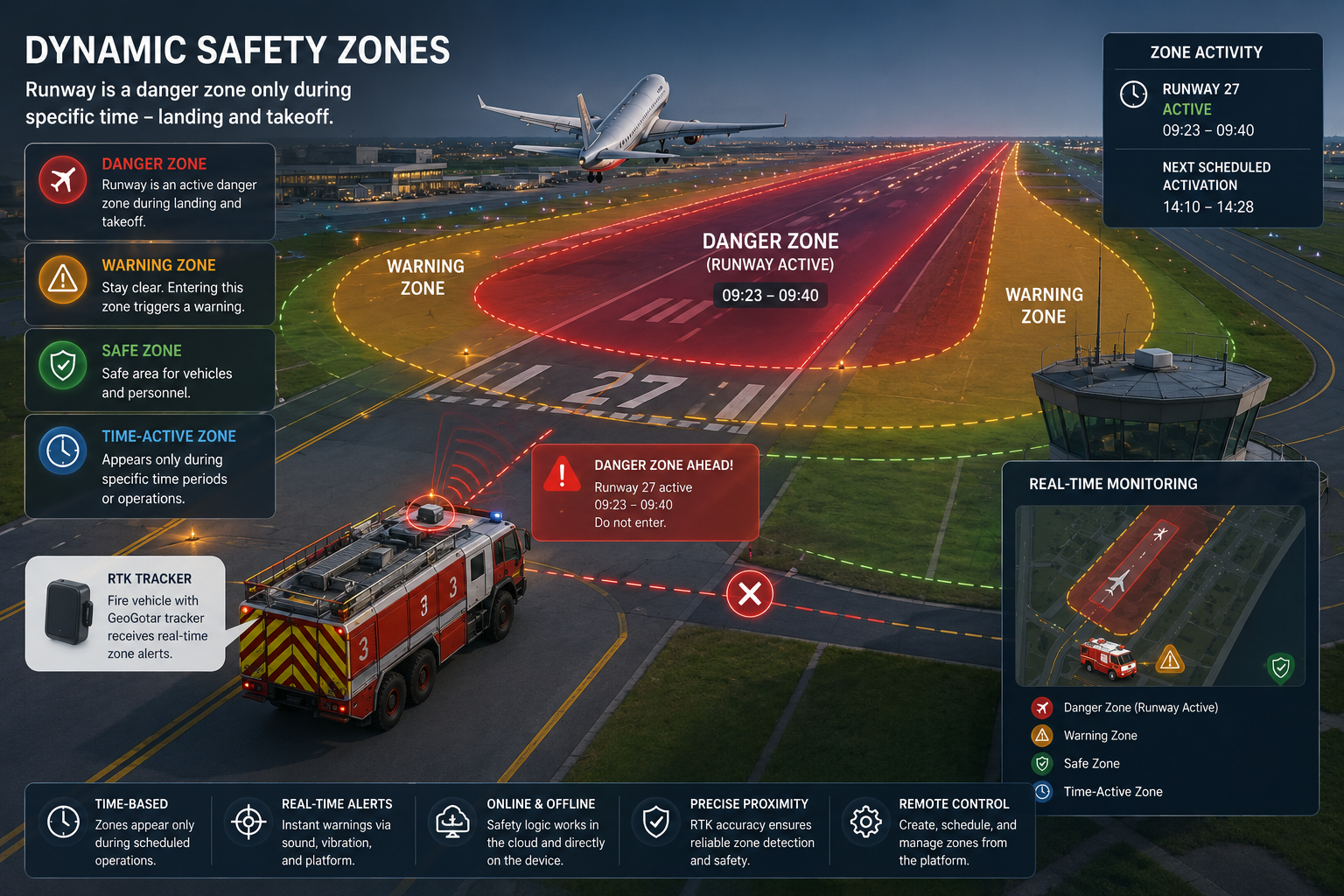
This visibility helps operations teams react quickly, review incidents, identify repeated boundary violations, and improve apron safety procedures over time.
Protection Even with Limited Connectivity
GeoGotar devices can support locally stored geofence logic so that safety rules continue to operate when cloud connectivity is interrupted. Depending on the device configuration, a tracker can provide a local warning and synchronize the event with the platform after connectivity is restored.
Airport Ground-Operation Applications
- Protect engine and intake areas during aircraft turnaround.
- Guide baggage handlers toward approved loading zones.
- Monitor belt loaders, baggage tractors, tugs, and service vehicles.
- Control access to restricted aircraft and apron areas.
- Record worker and vehicle movement for incident review.
- Support temporary safety zones for maintenance and servicing tasks.
Key Benefits for Airports
- Reduce the risk of workers entering restricted engine areas.
- Give baggage teams clear, location-based safe work boundaries.
- Improve real-time awareness of workers and equipment around aircraft.
- Generate immediate alerts when safety rules are violated.
- Create an event history for training, compliance, and incident analysis.
- Support safer, more efficient aircraft turnaround operations.