How GeoGotar Indoor Navigation Works
Outdoor RTK tracking depends on satellite signals and correction data to achieve very high accuracy. Indoors, that approach does not work reliably because GNSS visibility is limited or unavailable. To support indoor navigation, GeoGotar uses a different positioning model based on indoor wireless infrastructure.
GeoGotar trackers can support indoor positioning workflows using technologies such as Wi-Fi and UWB. Wi-Fi can help provide broad indoor location awareness across a building or facility, while UWB can provide more precise ranging between a tracker and installed anchors. The system can combine these inputs with facility maps, zone definitions, and platform logic to estimate and visualize indoor position.
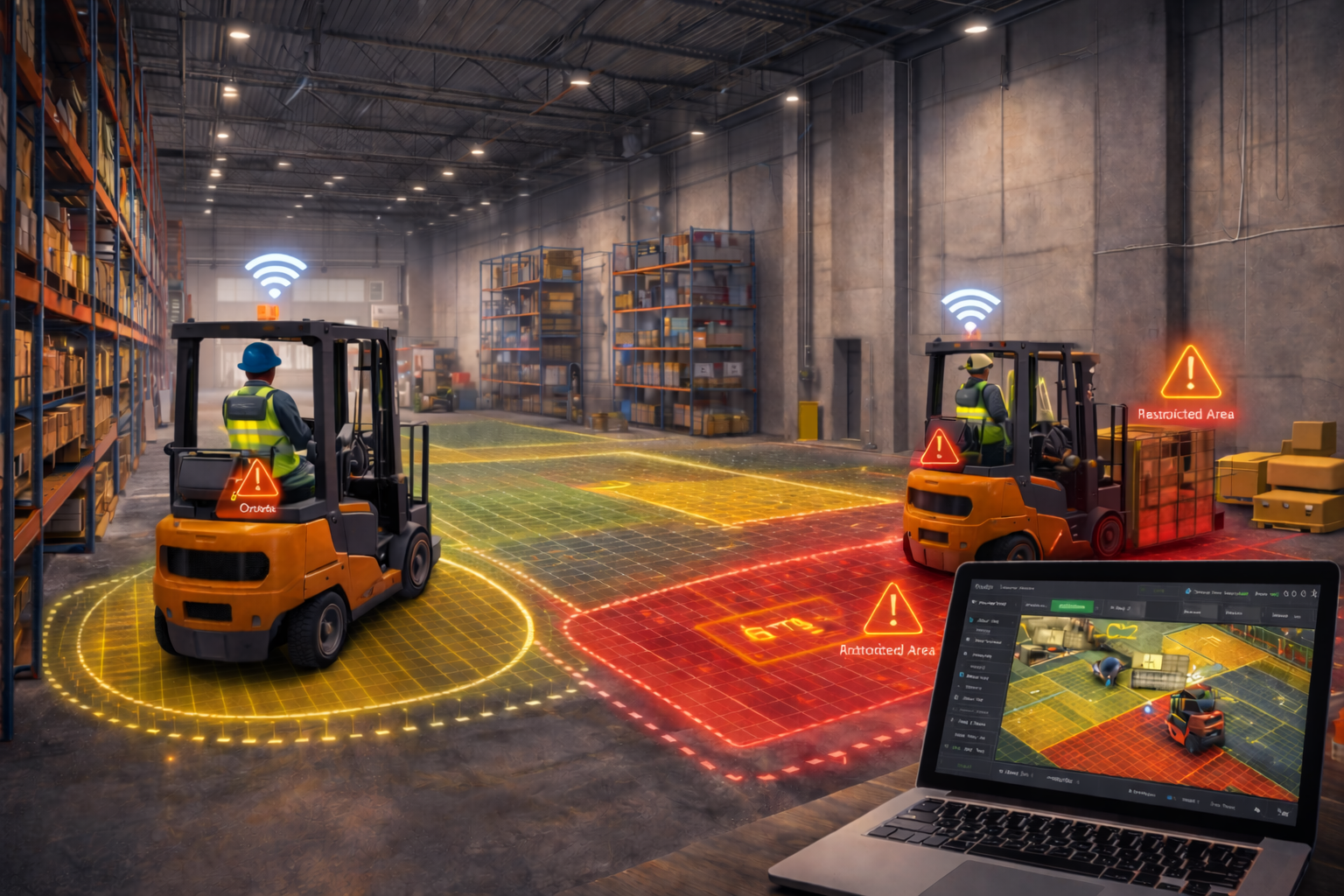
Tracker Support vs. Infrastructure Requirements
A key point is that GeoGotar tracker hardware can support indoor navigation, but indoor positioning does not work as a standalone feature without infrastructure. To achieve reliable results indoors, the facility must include the appropriate supporting environment.
That may include installed Wi-Fi access points, UWB anchors, indoor calibration, mapped building geometry, and defined indoor zones. Without that infrastructure, a tracker alone cannot deliver the same level of position awareness indoors that RTK can provide outdoors.
What Wi-Fi Contributes
Wi-Fi-based positioning can help provide large-area indoor awareness and help determine which part of a building, floor, or operational section a tracker is located in. This can be useful for broad indoor tracking, zone-level awareness, and building coverage where UWB precision is not required everywhere.
In many facilities, Wi-Fi is already deployed, which can make it a practical part of an indoor positioning architecture. GeoGotar can use this layer to improve indoor visibility and operational context.
What UWB Contributes
UWB is useful when indoor positioning needs more precise ranging and relative location accuracy. By measuring the distance between a GeoGotar tracker and installed UWB anchors, the system can provide better spatial precision for workflows such as indoor geofencing, equipment proximity, corridor-level positioning, and high-confidence zone transitions.
This is especially relevant for warehouses, industrial buildings, production floors, high-value asset tracking, and safety-sensitive indoor operations.
What Indoor Navigation Enables
- Indoor tracking of workers, carts, forklifts, and mobile equipment.
- Zone awareness inside warehouses, factories, and industrial facilities.
- Indoor geofencing for restricted or hazardous areas.
- Support for indoor route monitoring and movement analysis.
- Better visibility of asset location inside buildings.
- Indoor proximity workflows using installed UWB infrastructure.
Use Cases for Indoor GeoGotar Deployments
Indoor navigation can be valuable in logistics facilities, warehouses, manufacturing plants, hospitals, industrial operations, public safety facilities, and mixed indoor-outdoor sites. In these environments, organizations often need to know where people and assets are even after they move inside a building where GNSS is no longer reliable.
GeoGotar can support those workflows by extending tracking logic from outdoor operations into indoor areas, using the appropriate indoor positioning stack.
Indoor and Outdoor Positioning in One System
One of the advantages of the GeoGotar approach is that organizations do not need to think of outdoor RTK and indoor positioning as unrelated systems. The same platform can manage both: RTK and GNSS outdoors, and Wi-Fi + UWB indoors, depending on where the tracked device is operating.
This creates a more unified location architecture for organizations that operate across yards, job sites, campuses, warehouses, and buildings where assets move between outdoor and indoor environments.
Why the Infrastructure Layer Matters
The most important planning consideration for indoor navigation is infrastructure readiness. Indoor accuracy depends not only on the tracker, but on the environment in which it operates. That means indoor deployments should be designed with the correct number and placement of Wi-Fi access points or UWB anchors, as well as good facility mapping and calibrated operational zones.
In short, GeoGotar supports indoor navigation, but the performance of indoor positioning depends on the supporting infrastructure deployed in the building or facility.
Key Benefits of GeoGotar Indoor Navigation
- Extend location awareness into indoor environments.
- Combine Wi-Fi coverage with UWB precision where needed.
- Support indoor geofencing and zone-based workflows.
- Track people, equipment, and assets across indoor facilities.
- Use one platform for both indoor and outdoor operational visibility.
- Build indoor positioning around infrastructure that matches operational needs.